
AI is shifting from tool to utility.
Agentic AI Becomes the Default Interface
- Gemini Robotics 1.5 already puts agents in the physical world
- Genie 3 is training world models – agents that understand environments, not just text
- Google joined the Agentic AI Foundation and adopted MCP (Model Context Protocol)
2026 prediction: Expect Google Search to become agentic by default. Not “here are 10 links” – more like “I booked the restaurant, here’s the confirmation.” Operator-style functionality baked into Search and Gemini app.
Gemini 4 Likely Late 2026
The pattern is clear:
- Gemini 2.5 → March 2025
- Gemini 3 → November 2025
- Gemini 3 Flash → December 2025
2026 prediction: Gemini 4 drops Q4 2026. Expect a leap in autonomous task completion, longer context, and tighter integration with physical-world agents.
AI Overviews Get Smarter (and More Dominant)
- Gemini 3 Flash is being positioned as the inference workhorse – fast, cheap, Pro-grade quality
- Grounding improvements mean better RAG, better citations, better source selection
2026 prediction: AI Overviews become more confident, more comprehensive, and harder to displace. The “consideration set” shrinks. Brand salience matters more than ranking position.

Quantum + AI Convergence
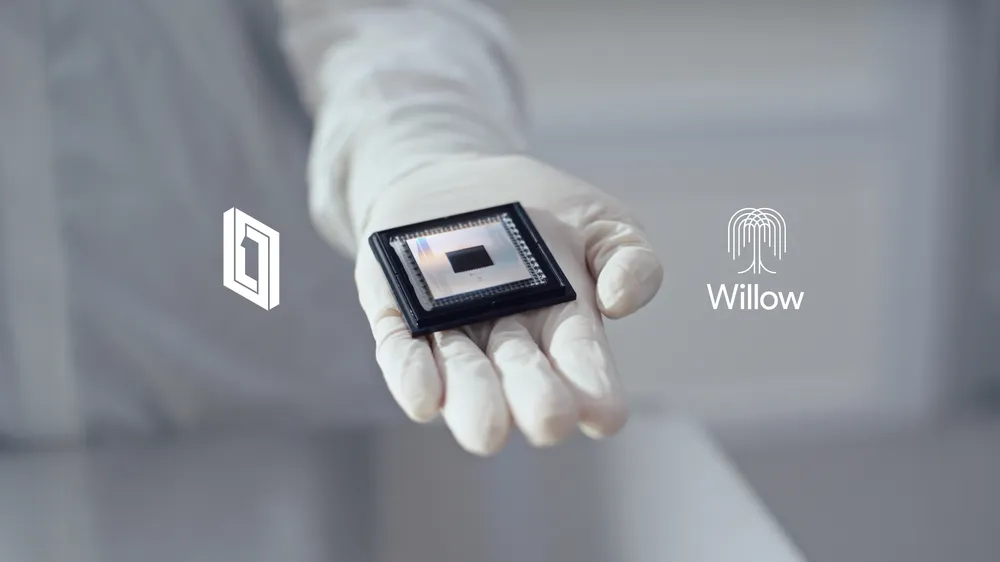
- Quantum Echoes showed real-world quantum advantage
- Nobel Prize validated Google’s quantum research leadership
- They’re clearly investing in quantum-accelerated ML
2026 prediction: Still early, but watch for announcements about quantum-enhanced training or inference. The timelines are shortening.
Physical World Integration Accelerates
- Gemini Robotics 1.5 isn’t a toy – it’s foundational
- AlphaEarth, WeatherNext 2, FireSat – Google is mapping and predicting the physical world at scale
2026 prediction: Google becomes a serious player in robotics, logistics, and real-world automation. The Gemini brain controlling physical systems.
Inference Infrastructure > Training Infrastructure
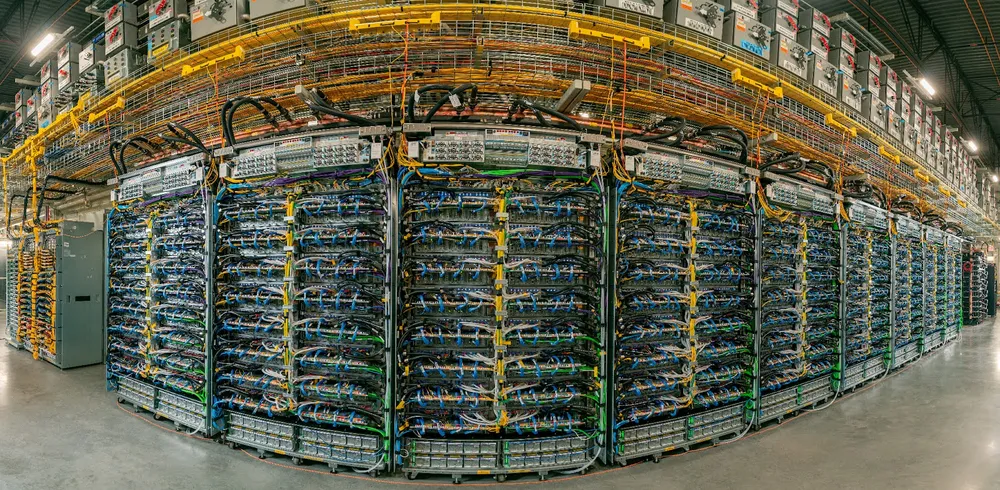
- Ironwood TPU is explicitly “for the age of inference”
- They’re measuring environmental impact of inference, not just training
2026 prediction: The bottleneck shifts. Training costs plateau; inference costs become the competitive battleground. Whoever runs inference cheapest at scale wins.
AI Mode Becomes the New Default Search Experience
Google quietly introduced AI Mode in March 2025 – a conversational, agentic layer on top of traditional Search. They mentioned it almost in passing in their year-end recap, which tells you something: it’s no longer experimental, it’s infrastructure.
2026 prediction: AI Mode stops being optional. Expect it to become the default interface for logged-in users, with traditional “10 blue links” relegated to a fallback. The implication for SEO: if you’re not visible in AI Mode, you’re not visible.
What This Means for AI SEO
| 2025 Reality | 2026+ Trajectory |
|---|---|
| AI Overviews summarize | AI Overviews act (book, buy, schedule) |
| Brand mentioned in response | Brand selected by agent |
| Optimize for grounding | Optimize for selection rate |
| Track static prompts | Track brand salience across intents |
| Content gets cited | Content gets trusted (model confidence) |
Google isn’t building a better search engine. They’re building an autonomous utility layer that sits between users and the entire digital (and physical) world. Traditional SEO becomes a subset of AI visibility optimization – and that window is still wide open for those paying attention.
Source: https://blog.google/technology/ai/2025-research-breakthroughs/
But wait there’s more!
Did you know that Google just open-sourced A2UI (Agent-to-User Interface), and it solves a problem most people haven’t articulated yet: how do AI agents safely generate rich UIs without becoming a security nightmare?
Right now, when an AI agent wants to show you something interactive—a form, a chart, a booking widget – it has limited options:
- Spit out text – Works, but ugly. No interactivity.
- Generate HTML/React/code – Powerful, but you’re now executing LLM-generated code. Good luck with your security audit.
- Use predefined templates – Safe, but inflexible. The agent can only show what you’ve already built.
None of these scale well for the agentic future we’re building toward, where specialized agents delegate tasks to other agents, and those agents need to communicate results back through rich interfaces.
A2UI’s Solution: Declarative UI as Data
A2UI flips the model. Instead of agents generating code, they generate descriptions of what they want to show. The client application then renders these descriptions using its own trusted, pre-built components.
Think of it like this: the agent says “I want a card with a title, an image, and two buttons.” Your app looks at its component library, finds its own Card, Image, and Button implementations, and renders them. The agent never touched your codebase.
Safe like data. Expressive like code.
The format is JSON-based, designed specifically for LLM generation: flat structure (no deep nesting to confuse the model), ID-based references (easy incremental updates), and streaming-friendly (UI builds progressively as the agent thinks).
Why This Matters
Cross-platform, zero effort
One A2UI response renders on Angular, Flutter, React, SwiftUI – whatever your client uses. The agent doesn’t care. Write once, render anywhere.
Trust boundaries become manageable
When your orchestrator agent delegates to a third-party travel booking agent, that remote agent can return a UI. You render it safely because you control which components exist. No iframe hacks. No sandboxing nightmares.
LLMs are bad at perfect JSON
A2UI’s flat, streaming structure means the model doesn’t need to produce valid JSON in one shot. It can stream components incrementally. Users see the UI building in real-time instead of staring at a spinner.
The right abstraction layer for multi-agent systems
A2UI is transport-agnostic. It works over A2A (Google’s Agent-to-Agent protocol), AG UI, REST, whatever. This positions it as a potential standard for how agents communicate visual intent.
Current State
A2UI is v0.8 (Public Preview). Functional but evolving. Google is actively seeking contributions – particularly for renderers (React, SwiftUI, Jetpack Compose are on the roadmap).
Renderers currently available: Lit (Web Components), Angular, and Flutter (via GenUI SDK).
CopilotKit has already built a widget builder on top of it.

The Bigger Picture
A2UI fits into Google’s broader agent infrastructure play: A2A (Agent-to-Agent communication), A2UI (Agent-to-User interfaces), and ADK (Agent Development Kit).
If you’re building agentic systems, these are the primitives Google wants you using. Whether they become standards or remain Google-centric depends on adoption.
GitHub: github.com/google/A2UI
Docs: a2ui.org
The Missing Piece: Agent Payments
A2UI handles showing things to users. But what about when agents need to buy things?
Google launched AP2 (Agent Payments Protocol) in September 2025 to address exactly this. It’s an open standard for AI agents to securely complete transactions without a human clicking “buy.”
The core mechanism is Mandates – cryptographically signed digital contracts that prove a user authorized a specific transaction. This solves three critical problems: Authorization (did the user approve this?), Authenticity (does this reflect real intent, not hallucination?), and Accountability (who’s responsible if something goes wrong?).
The protocol is payment-agnostic – cards, stablecoins, real-time bank transfers all work. Google collaborated with Coinbase, MetaMask, and the Ethereum Foundation on an A2A x402 extension for crypto payments.
Early adopters include Cloudflare, Mastercard, PayPal, American Express, Coinbase, Shopify, Etsy, Salesforce, and 60+ others. Cloudflare has built complementary infrastructure: Web Bot Auth for agent authentication, the Trusted Agent Protocol with Visa, and the x402 Foundation with Coinbase.
Together, A2A + A2UI + AP2 form the stack for full agentic commerce: agents talk to agents (A2A), agents show interfaces to users (A2UI), and agents execute payments (AP2).
AP2 Docs: ap2-protocol.org


Leave a Reply