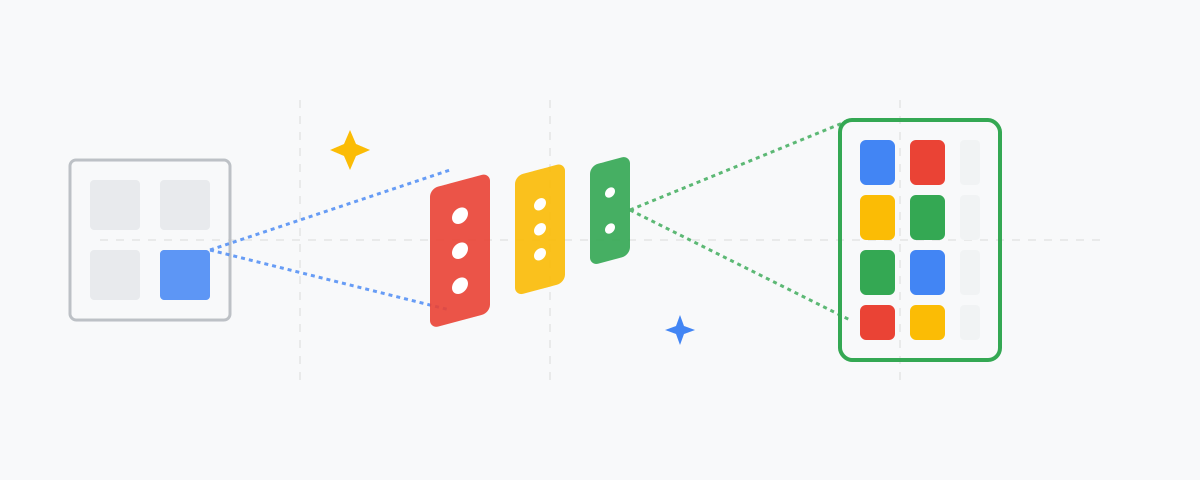
Google and the Computer History Museum open-sourced the AlexNet code, highlighting its role in launching deep learning and shaping Google's AI-first strategy.
When Google, in collaboration with the Computer History Museum, open-sourced the original AlexNet source code, it marked a significant moment in the history of artificial intelligence. AlexNet was more than just an academic breakthrough; it was the tipping point that launched deep learning into mainstream AI research and reshaped the future of companies like Google.
Back in 2012, AlexNet, developed by Alex Krizhevsky, Ilya Sutskever, and Geoffrey Hinton, dominated the ImageNet competition, achieving an unprecedented accuracy leap over traditional computer vision methods. It was the first deep neural network to prove that convolutional neural networks (CNNs) could outperform classical machine learning approaches for image recognition at scale.
This moment triggered a seismic shift across the industry. Google, Facebook, and other tech giants recognized that deep learning was the future, igniting an AI arms race that still continues today.
AlexNet’s success validated the power of deep learning, pushing Google to reorient itself as an AI-first company. Prior to this, Google’s AI efforts were rooted in rule-based systems, knowledge graphs, and traditional machine learning. AlexNet proved that deep networks could revolutionize not just image recognition, but the entire field of AI.
In 2011, Google had already launched Google Brain, an internal deep learning research project, but AlexNet’s performance served as confirmation that they were on the right track. Shortly after, in 2014, Google acquired DeepMind, a move that signaled its commitment to deep learning and artificial general intelligence (AGI).
Seeing the potential of deep learning, Google doubled down on developing an AI framework that would democratize access to these powerful models. This led to the release of TensorFlow in 2015, which has since become one of the most widely used deep learning frameworks worldwide.
One of AlexNet’s most important lessons was that GPUs were critical for training deep neural networks. Recognizing this, Google saw the necessity of developing custom hardware optimized for AI workloads. This led to the creation of Tensor Processing Units (TPUs), which now power Google’s AI-driven products, from Google Search to Google Photos and Google Assistant.
AlexNet’s impact went beyond research and infrastructure, reshaping Google’s core products:
By making the original AlexNet source code publicly available, Google and the Computer History Museum are cementing AlexNet’s place in history as the turning point for modern AI. This move serves multiple purposes:
When AlexNet won the 2012 ImageNet competition, it didn’t just beat the competition, it changed the way companies like Google approached AI. Deep learning wasn’t just a research topic anymore; it was the future. That moment set off a chain reaction, leading to breakthroughs like TensorFlow, TPUs, and AI-powered products that define Google today. Open-sourcing AlexNet now is a way of acknowledging its impact and how much the field has evolved since then.
 Dan Petrovic ·
Mar 21, 09:45
Dan Petrovic ·
Mar 21, 09:45