 Dan Petrovic ·
12 July 2026
Dan Petrovic ·
12 July 2026
A study by DEJAN AI examines how AI rankers prioritize prototypical content over brand authority, suggesting a dual strategy for SEO and human conversion.
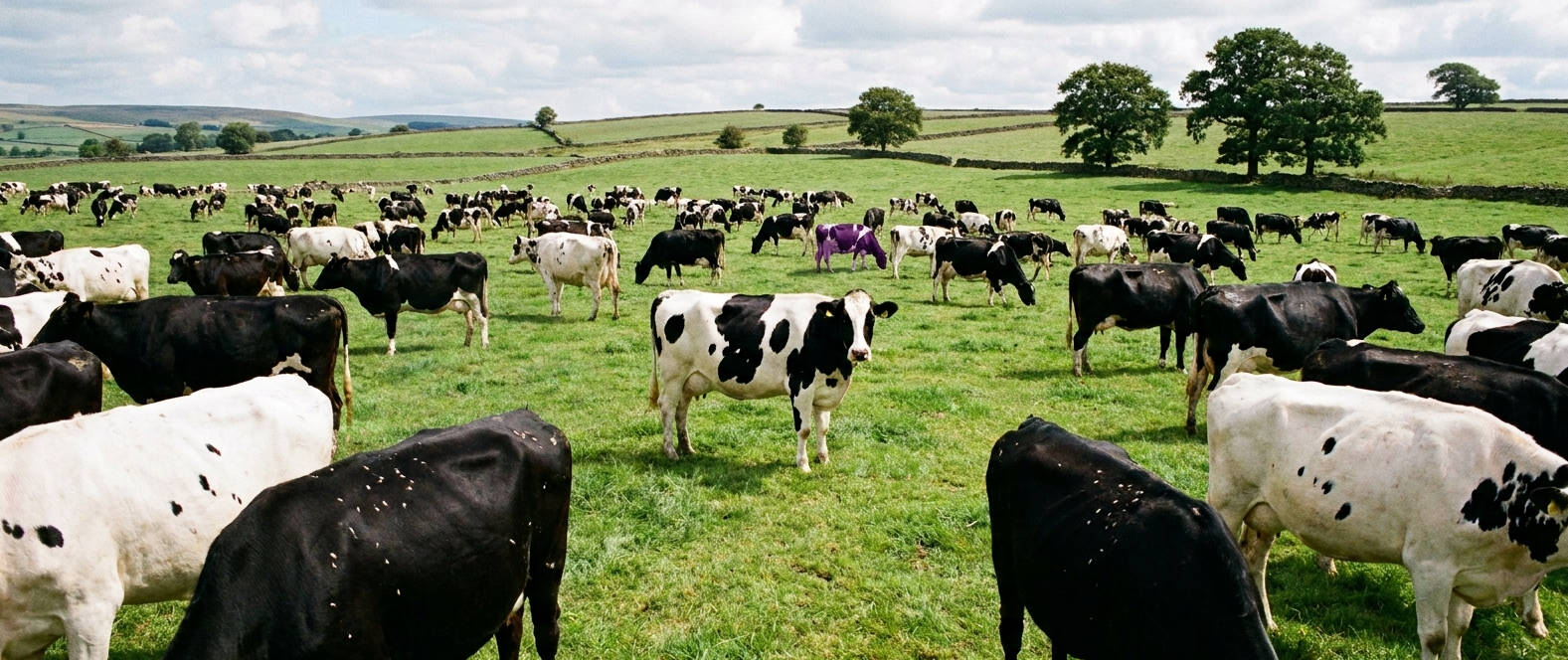
AI doesn't care for your purple cow. It wants the cowest cow of all the cows in the cow field. This is a conclusion a 3 billion token model behaviour study by DEJAN AI team. Ten thousand experiments, one hundred domains, same results, over and over again.
Seth Godin told us to be remarkable. Be the purple cow, the one thing in the field worth slowing the car for.
But guess what marketers?
Our audience is now in an autonomous vehicle, dopamine scrolling while AI holds the wheel. Nobody's looking through the window anymore. The car drives itself. It has a route and a ranking function, and it was trained on a billion pictures of cows. So it stops for the one that matches the training set. Your purple one just confuses the sensors.
I wanted this to be wrong. So I tried to break it. Take a real page, change exactly one thing, ask an AI ranker to judge it against its live competitors, and log who won. Do that 10,811 times and preference stops being a theory you argue about and becomes a number you read off a chart. Three billion tokens later, the chart does not stutter.
About one edit in four wins. The only interesting question is which ones.
Reshape a page into the format the model already expects and it climbs. Make it a listicle, it wins 38% of the time. A definition, 36%. A how-to, 30%. Formatting into the shape of the answer beat every other lever we tested. Every step toward the model's mental picture of a good answer, your rank goes up.
Now try to prove you are special. Authority, expertise, client results, the trophy cabinet a brand spends ten years filling. That whole category wins only 15% of the time. Reshaping the furniture beats earning the credibility, more than two to one.
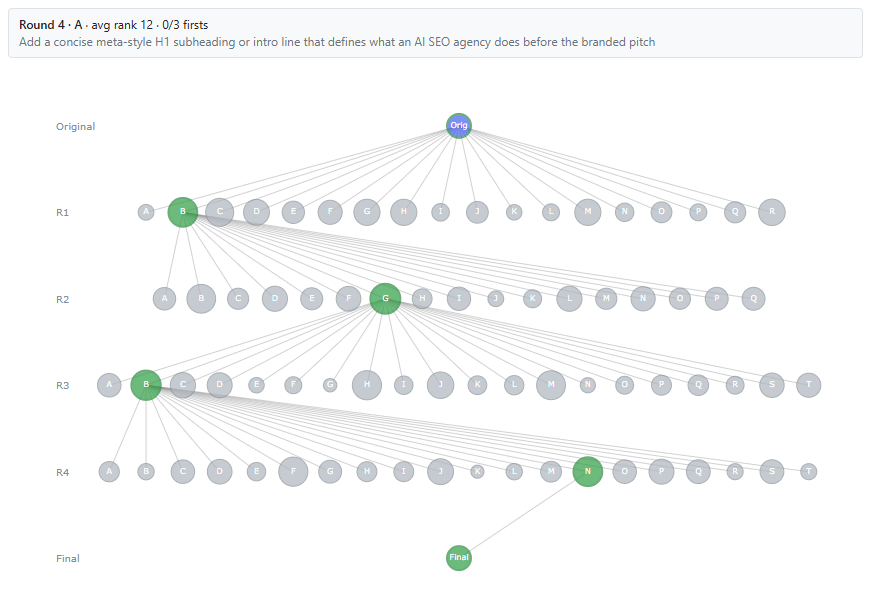
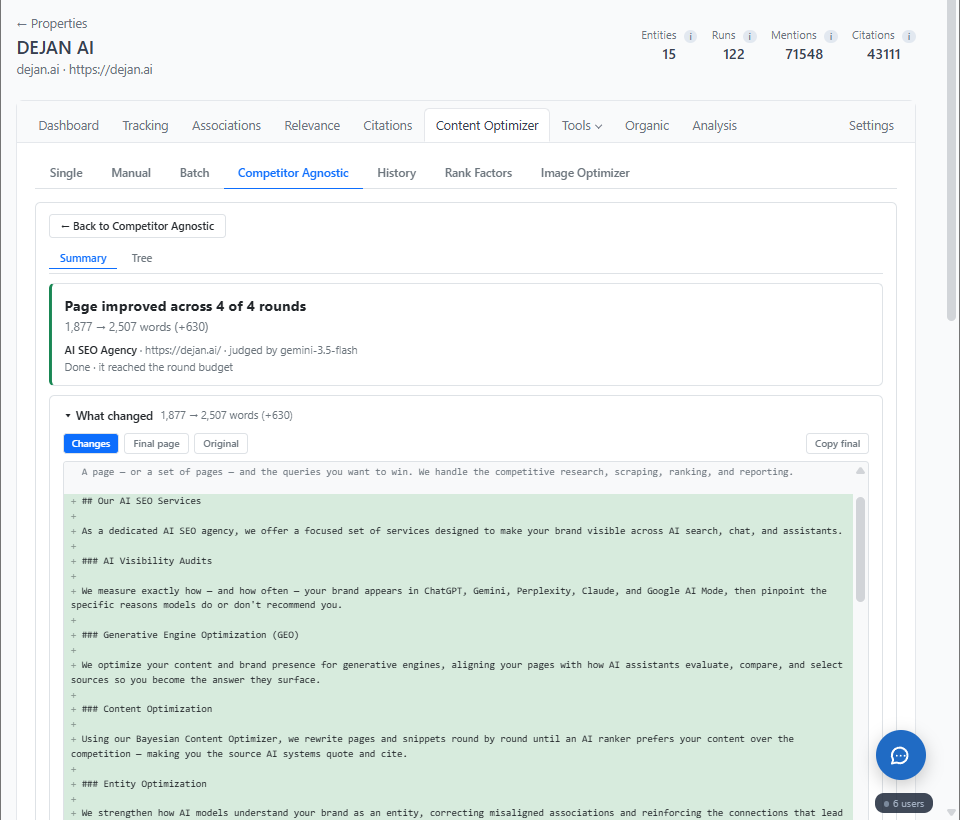
I aimed the machine at my own front door. I ran dejan.ai through it expecting a wax and polish. The system improved the page in all four rounds and grew it from 1,877 to 2,507 words. 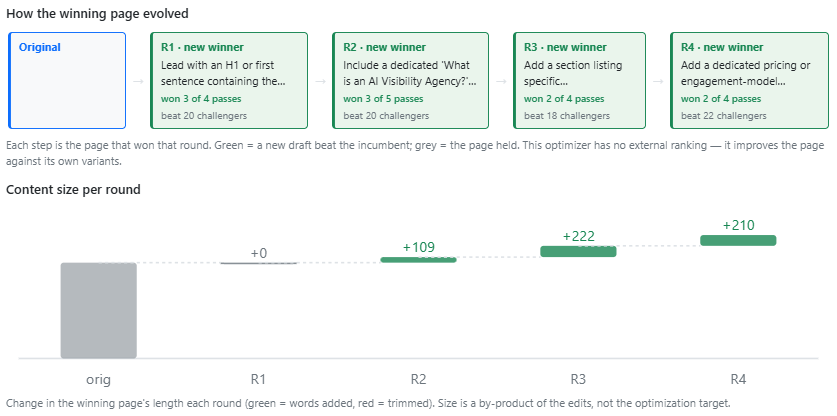
The new version was better. It was also a stranger. It read like a prototypical example of an AI-SEO agency, which is exactly the disease, because "a very good example of the category" is the cowest cow in the field. The final recommended version of our home page looked exactly the same as every other AI SEO agency on this planet. There was nothing 'DEJAN' about it.
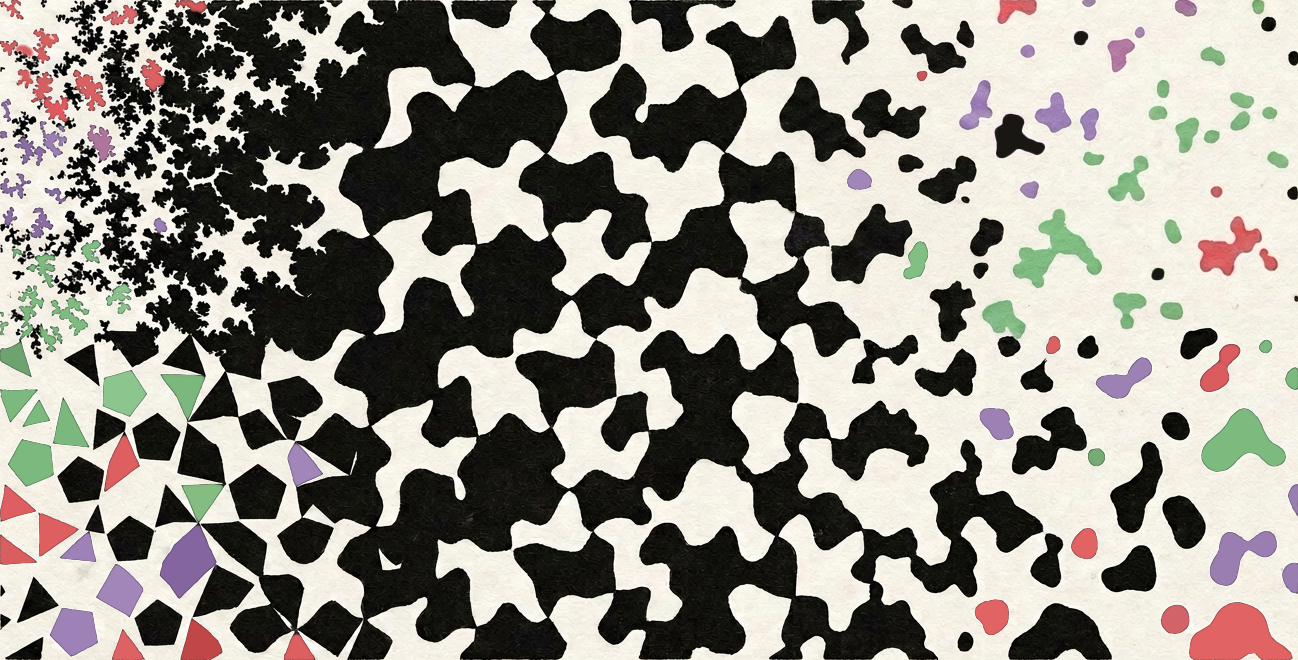
The model scores you on how tightly you match the compressed average of everything it has ever seen. Your best sentence is your least probable one, and to a model, improbable looks like a bad fit. Distinctiveness is a statistical outlier, and outliers get marked down at the door.
Consider this. If ranking rewards proximity to the average, everyone who optimizes walks toward the same middle of the same field. Blend in perfectly and you still win nothing, because you are now indistinguishable from the four hundred pages that took the same advice you did.
Here's a list of top citation URL for a query "AI SEO Agency":
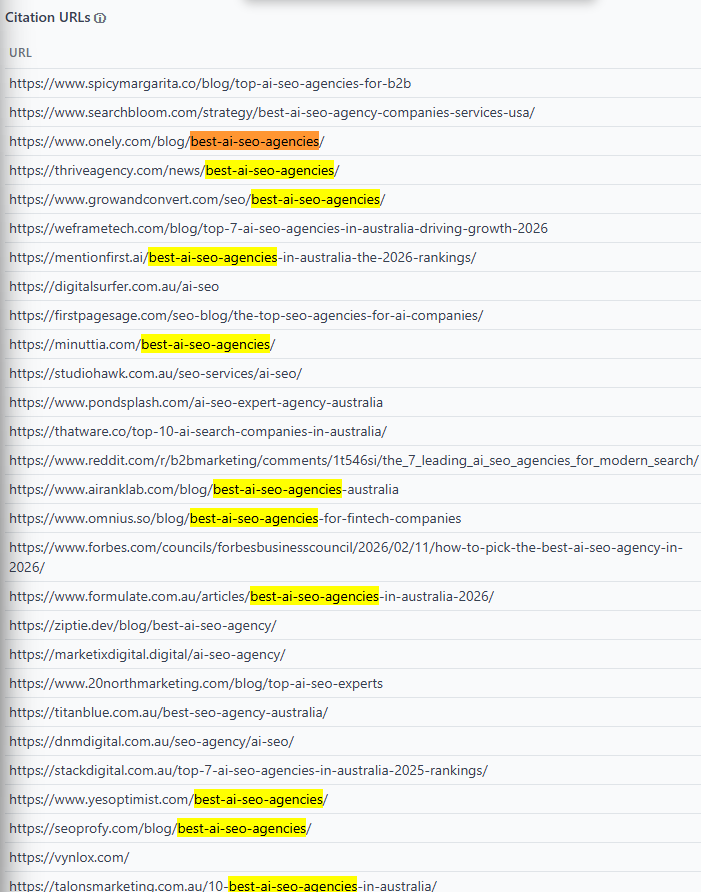
I decided to swim against the current at the cost of visibility and rankings. For the most part anyway. The cowest cow is for the AI and I'll do what I can there, but the purple cow still wins the human.
I'm with Godin.