 Dan Petrovic ·
01 September 2026
Dan Petrovic ·
01 September 2026
This page compares the 1955 Dartmouth artificial intelligence proposal with the public record of AI capabilities and world models as of 2026.
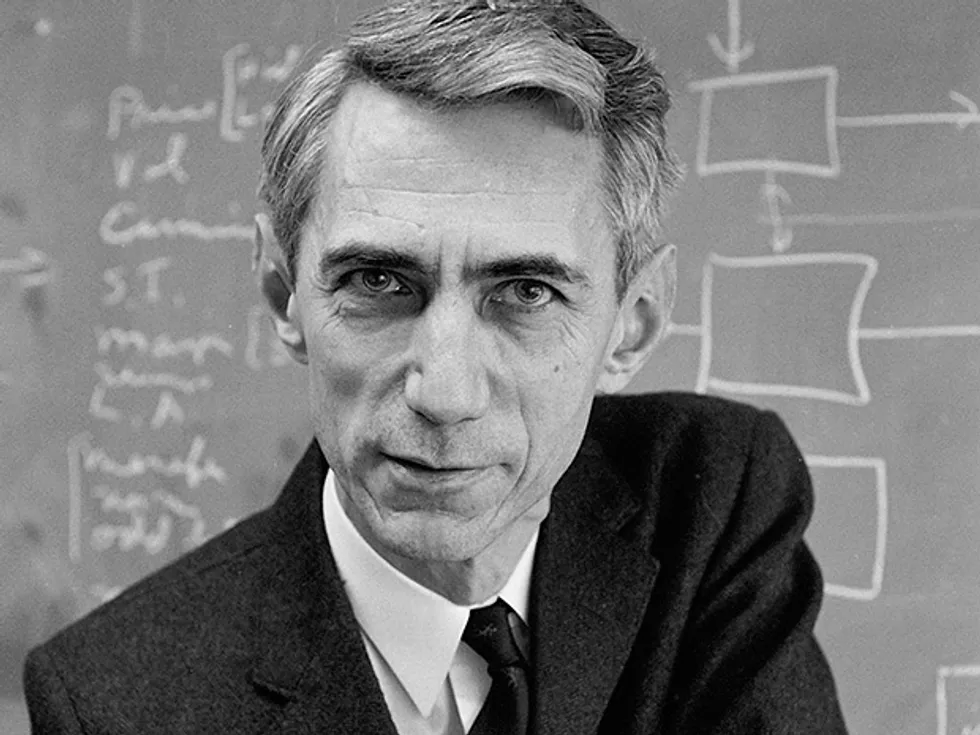
On 31 August 1955, John McCarthy, Marvin Minsky, Nathaniel Rochester and Claude Shannon asked the Rockefeller Foundation for $13,500 to run a two-month, ten-person study of artificial intelligence at Dartmouth College.
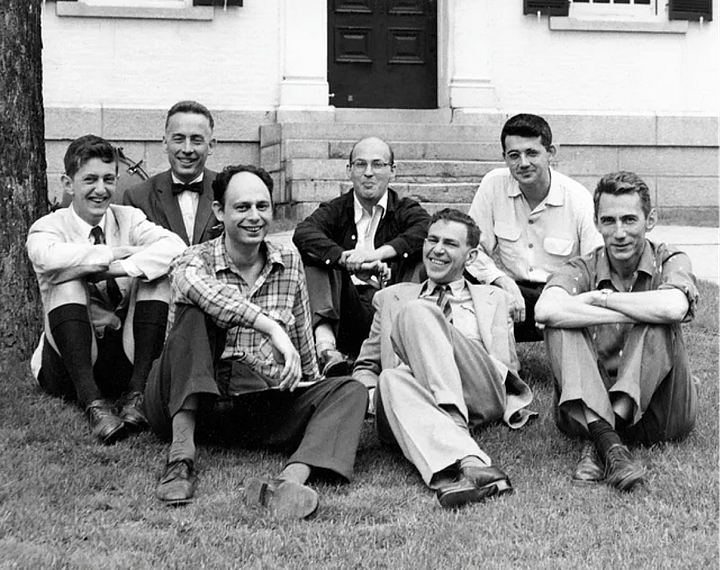
Their proposal listed seven problems.
As of September 2026, machines use language, trained neural networks form usable concepts, and systems solve many problems once reserved for humans. Self-improvement stops short of a machine that designs its own successor. Abstractions taken from raw physical scenes still break in published world-model tests.
The proposal’s conjecture was that “every aspect of learning or any other feature of intelligence can in principle be so precisely described that a machine can be made to simulate it.” The authors expected a “significant advance” in one summer. The 1956 workshop produced no written report.
McCarthy requested $13,500. Robert Morison of the Rockefeller Foundation offered $7,500 for five weeks. On 30 November 1955 he wrote that the field was “still difficult to grasp very clearly” and that the Foundation preferred “a modest gamble.” Source: Rockefeller Archive Center, letter quoted in “A Roomful of Brains.”
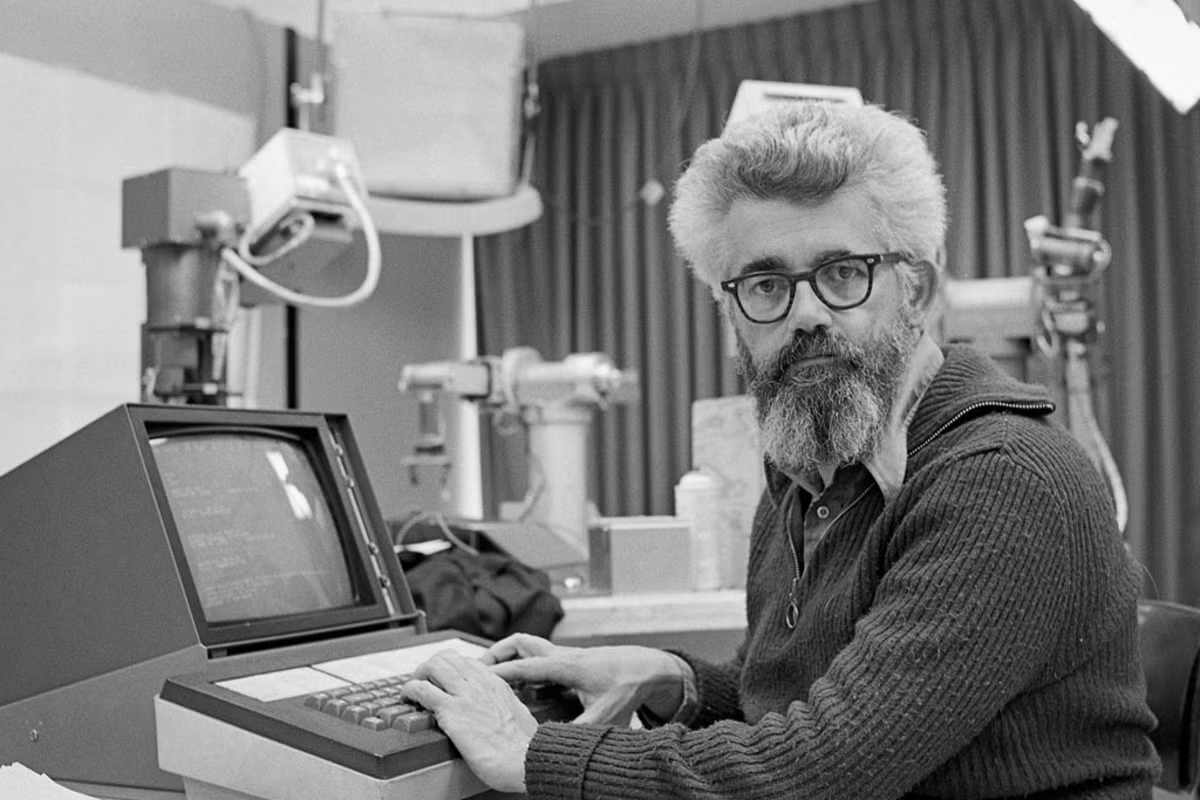
The Foundation’s later account calls the 1956 project five weeks long. Source: Rockefeller Foundation, 13 November 2025. Notes by Ray Solomonoff, who attended, date the gathering from about 18 June to 17 August 1956, roughly eight weeks. McCarthy, Minsky and Solomonoff were present for the full run. Other invited researchers came for days or weeks. McCarthy added a 1996 note to the circulated proposal: “There was no report.”
The proposal numbered seven “aspects of the artificial intelligence problem.” The right-hand column is the public record as of 1 September 2026.
| 1955 wording | Public record, September 2026 |
|---|---|
| Automatic computers | The authors wrote that “the major obstacle is not lack of machine capacity, but our inability to write programs taking full advantage of what we have.” Training large networks on large computers later became the method that moved the other items. |
| How can a computer be programmed to use a language | Large language models take natural language as input and produce language, code and tool calls. McCarthy asked for a formal language with rules of conjecture and self-reference. Working systems use statistical next-token prediction. |
| Neuron nets | Deep networks trained at scale form representations that support classification, generation and planning. The 1955 examples were small theoretical nets associated with Uttley, Rashevsky, Pitts and McCulloch, Farley and Clark, and Minsky. |
| Theory of the size of a calculation | Shannon and McCarthy wanted a measure of calculation efficiency tied to a theory of the complexity of functions. The working substitutes are empirical scaling curves and extra computation spent while answering. |
| Self-improvement | Anthropic reported that in May 2026 more than 80% of code merged into its production codebase was authored by Claude, up from low single digits before Claude Code launched in February 2025, and that engineers shipped about eight times as much code per quarter as in 2024. The same post states that a system which “fully autonomously design[s] and develop[s] its own successor” does not yet exist. |
| Abstractions | Models trained on text and code form abstractions that transfer across exams, repositories and languages. Models trained to predict the next state of a physical scene still fail published robustness tests when colour or background changes. |
| Randomness and creativity | Rochester described “controlled randomness” inside otherwise orderly thinking. Current generators sample from a learned distribution (temperature, diffusion noise, reinforcement-learning exploration). Whether that sampling counts as invention is a question the proposal left open. |
Anthropic figures: “When AI Builds Itself,” published 4 June 2026, as quoted in contemporaneous reports of the company post. Forbes summary of the Anthropic text
Author | 1955 research note | Later analogue in public systems |
|---|---|---|
Shannon | Reliable computing with unreliable parts; information flowing in closed loops; a series of simple environments paired with models that adapt to them | Agent loops with feedback. World-model training that starts in a limited simulated environment. |
Minsky | Sensory abstractions paired with motor abstractions so the machine builds “an abstract model of the environment,” tries a plan inside that model, then acts | Model-based agents. Vision-language-action robots. Learned world models. |
Rochester | Originality by modifying a failing internal “engine” rather than executing random instructions | Search plus a verifier. Still an open method for problems that have no accepted solution in the training data. |
McCarthy | An artificial language that is concise, can define other languages, can refer to its user, and has rules of conjecture as well as rules of proof | Natural-language models used as the interface for reasoning and action. The formal conjecture rules were not built. |
McCarthy’s language section is the item that moved furthest. Current systems converse, write code, and keep context windows measured in hundreds of thousands to a million tokens. They do not implement his proposed rules of conjecture.
Item 3 moved after 2012, when large trained networks replaced the small nets named in 1955. The representations are not written down as a “precise description” of the kind the opening conjecture required.
On problems “now reserved for humans,” public 2025–2026 evaluations include gold-medal-level scores on International Mathematical Olympiad problems in structured test settings. Those are exam and contest conditions.
The Anthropic post of 4 June 2026 gives internal production counts. The 80% figure is the share of merged production code in May 2026 attributed to Claude. The 8× figure is code shipped per engineer per quarter in the second quarter of 2026 against a 2024 baseline.
The same post defines recursive self-improvement as an AI system that designs and develops its own successor without humans driving each step. It states that this has not happened and that it is not inevitable.
Separate public work describes bounded loops in which one agent rewrites the software harness of another agent over days. Those loops do not train a new foundation model from scratch.
Minsky wrote that progress would be slow unless the machine formed sensory and motor abstractions and used them to predict “the changes in the environment that might be expected if the corresponding motor act actually took place.”
Google DeepMind announced Genie 3 on 5 August 2025 as a world model that generates interactive environments at 720p and 24 frames per second, “retaining consistency for a few minutes.” DeepMind
Project Genie, a web prototype running Genie 3, opened to Google AI Ultra subscribers in the United States on 29 January 2026. Google
Google DeepMind announced Gemini Robotics 2 on 30 July 2026 as a vision-language-action model that “converts vision and language input into motor control” for full humanoids “from feet to fingertips,” plus an embodied-reasoning planner (ER 2) and an on-device variant. ER 2 is the model described as reachable through Gemini interfaces. The whole-body and on-device models were described as early-access. DeepMind
A different line predicts latent state rather than pixels. V-JEPA 2 (June 2025) is a video joint-embedding model trained for understanding, prediction and planning. arXiv:2506.09985
LeJEPA adds a Gaussian regularizer. A 25 May 2026 paper, “When Does LeJEPA Learn a World Model?,” proves linear recovery of latent variables when those latents are Gaussian and the dynamics are stationary with additive noise. arXiv:2605.26379
The evaluation platform “stable-worldmodel,” posted 20 May 2026 with Yann LeCun among the authors, reports that tested world models drop on a Push-T manipulation task when visual details change: about 50% success in the clean setting, about 12% when the agent colour changes, about 6% when the background colour changes. Those figures are the paper’s reported numbers.
Pixel generators such as Genie spend capacity on appearance and can be inspected by eye. Embedding models such as JEPA discard pixels and plan in the latent space. The May 2026 proof applies to a defined class of worlds. It does not state that the physical world is in that class.
The 1955 text treated machine capacity as secondary to programming skill. The route that moved items 2 and 3, and the exam-style part of “human-reserved problems,” was large trained networks run on large computers. Formal complexity theory developed on a separate track from item 4. P versus NP remains open.