
Category: Content
-
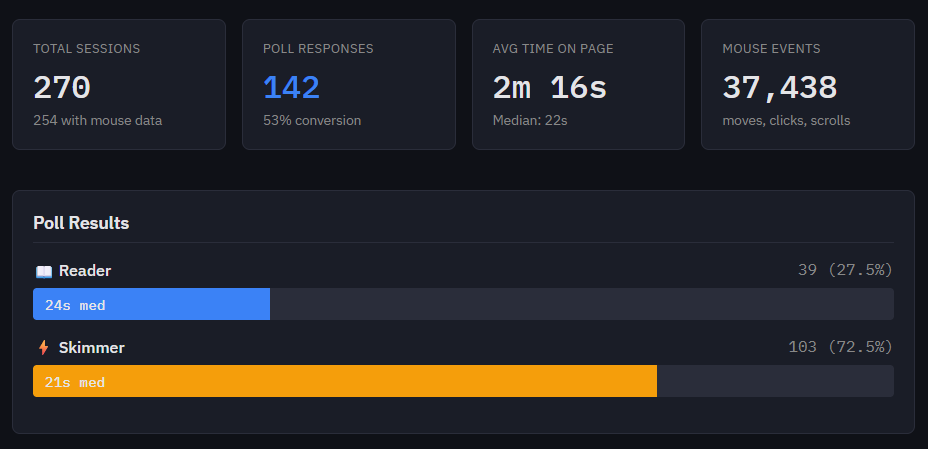
Most People Don’t Read
This is a qualitative study on a small number of anonymized users while collecting a very large number of datapoints from each one. In December 2025, we published an article asking a simple question: Do you read or skim? We tracked 269 visitors using mouse movements, scroll patterns, and time-on-page data, then asked them to…
-
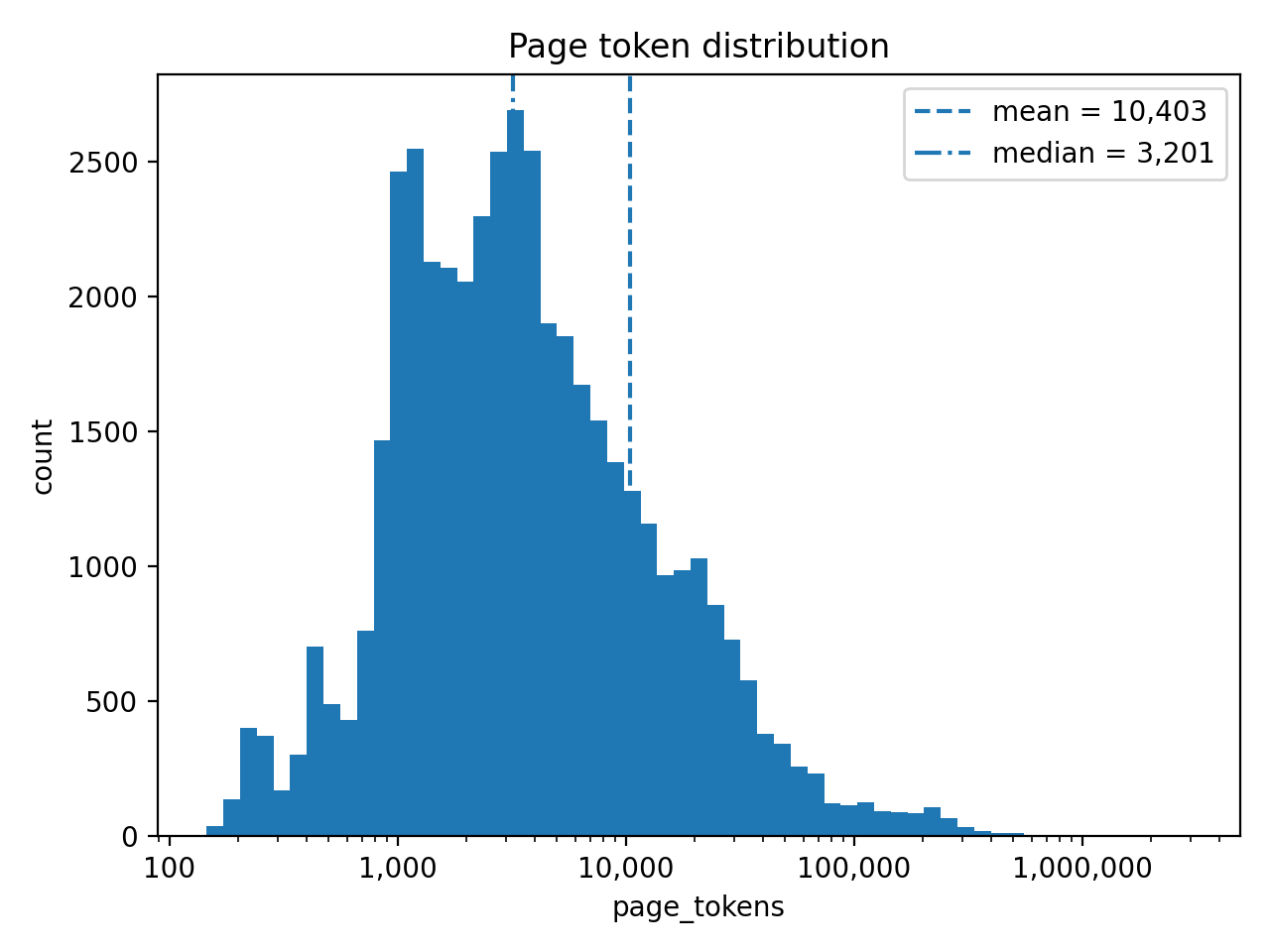
How Long Are Web Pages?
A Token Count Analysis of 45,000 Real-World URLs We recently analyzed 44,684 web pages and measured their content length using Gemini’s token counter. The results reveal fascinating insights about the true scale of web content—and why it matters for AI applications. Metric Value Total Pages Analyzed 44,684 Page Content Tokens 464,854,727 Total Tokens (all) 541,062,817 The median…
-
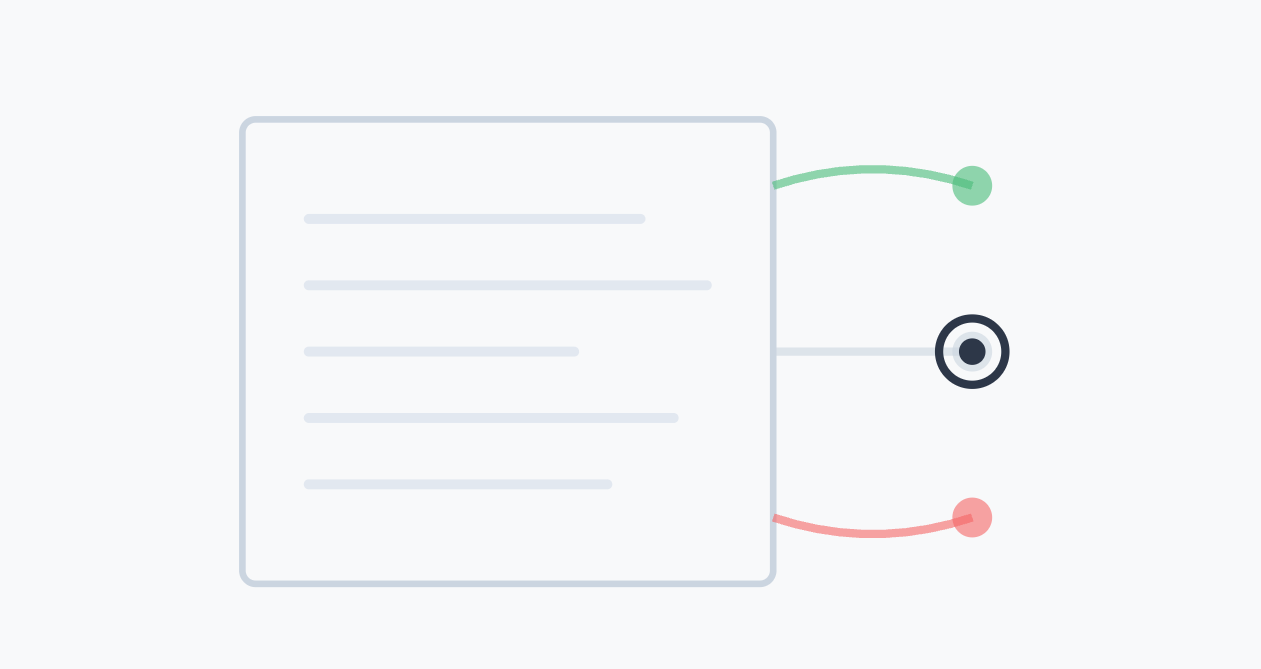
How much of your content survives the AI Search filter?
But how much if your page content actually makes it to the model? About one third on average. Metric Value Total Characters Across All Pages 21,198 Total Characters Cited 6,818 Total Characters Not Cited 14,380 Overall Citation Coverage 32.16% Citation Analysis: owayo.com Source: owayo.com Citation Snippet Custom Running Shirts – owayo: owayo manufactures custom running…
-

CAPS: A Content Attribution Payment Scheme for the AI Era
The Problem: A Broken Content Ecosystem We’re watching the collapse of the web’s economic model in real-time, and everyone knows it. AI assistants have fundamentally changed how people consume information. Why wade through ten articles when Claude, ChatGPT, or Gemini can synthesize an answer in seconds? Why maintain 100 browser tabs for research when AI…
-

Using GPT-5 Structured Output Markers to Detect AI-Generated Content Online
When you populate your website with language model–generated text, you inherit a subtle but real risk: AI-specific artifacts may leak into the published content. These markers aren’t always obvious to human readers, but they can be highly visible to search engines, researchers, and competitors. One such artifact is the structured output marker that GPT-5 (and…
-
Comprehensive Guide to Identifying AI Comment Bots
Some people use AI to speed up the process of getting their ideas and message out. Others use it to polish up their language which I think is really cool use of AI, especially if they’re not a native speaker. But there’s also the hordes of mindless AI slop generators masquerading as meaningful human engagement,…
-
What is “Help Me Write” in Chrome?
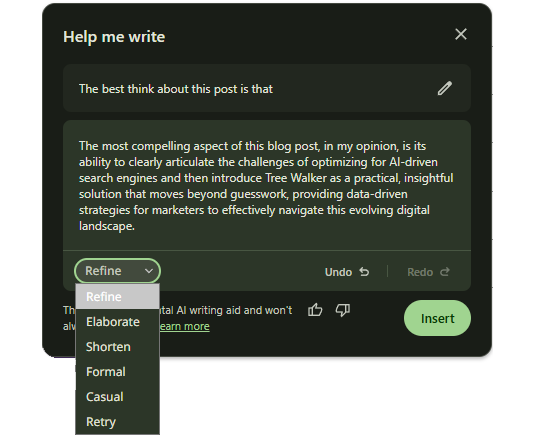
Introduction “Help Me Write” is Google Chrome’s AI-powered writing assistant designed to help users create short-form content directly within their web browser. Launched with Chrome version 121, this feature leverages artificial intelligence to generate text suggestions based on user prompts and the context of the webpage you’re viewing. How Does Help Me Write Work? The…
-

Journalism Is Dead. Say Hello to Gournalism.
John Botman For nearly two centuries, journalism operated under the assumption that truth mattered, stories should be original, and humans should write things for other humans to read. Quaint, right? We trusted journalists—those quirky creatures who collected facts, verified sources, and occasionally spelled words correctly—to give us nuanced, insightful accounts of the world. Oh, how…
-
Human Friendly Content is AI Friendly Content
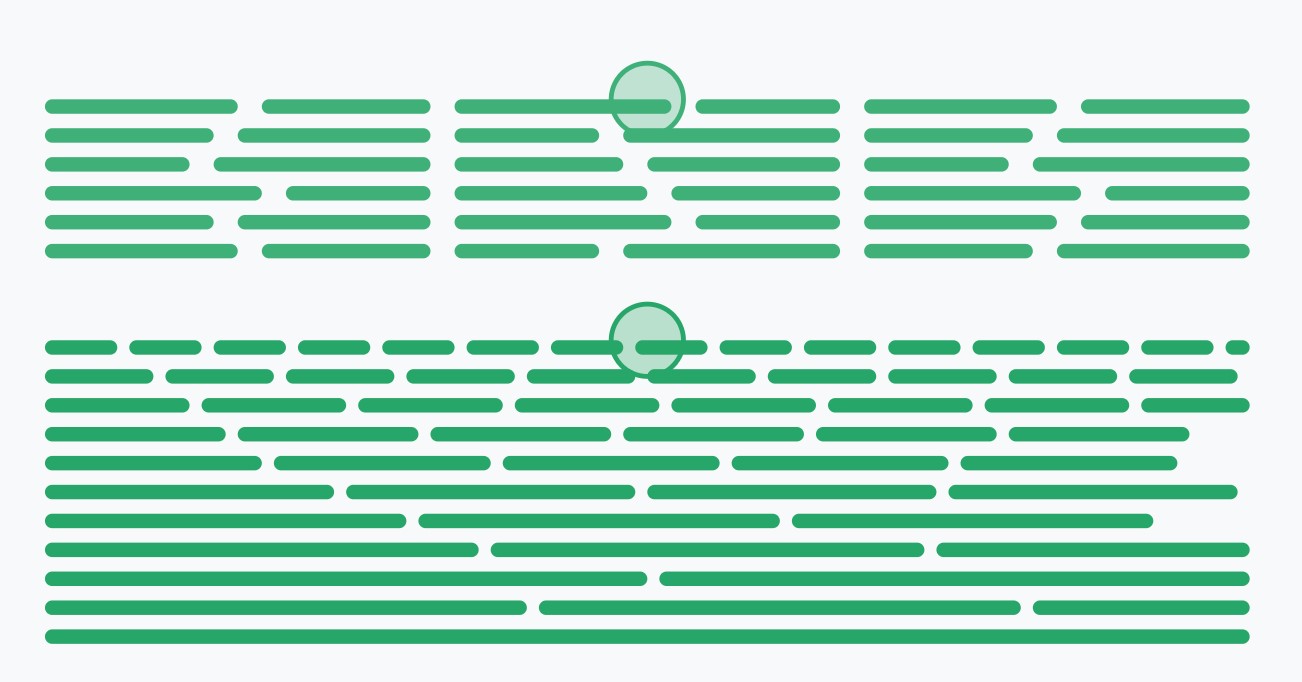
What do humans and AI have in common? We don’t read. Instead we rely on attention mechanisms to process text information. When optimising content for AI and humans you must get to the point early and optimise content to reduce cognitive load. Striking parallels in attention and information processing Transformers use attention mechanisms mathematically equivalent to…
-
Content Substance Classification
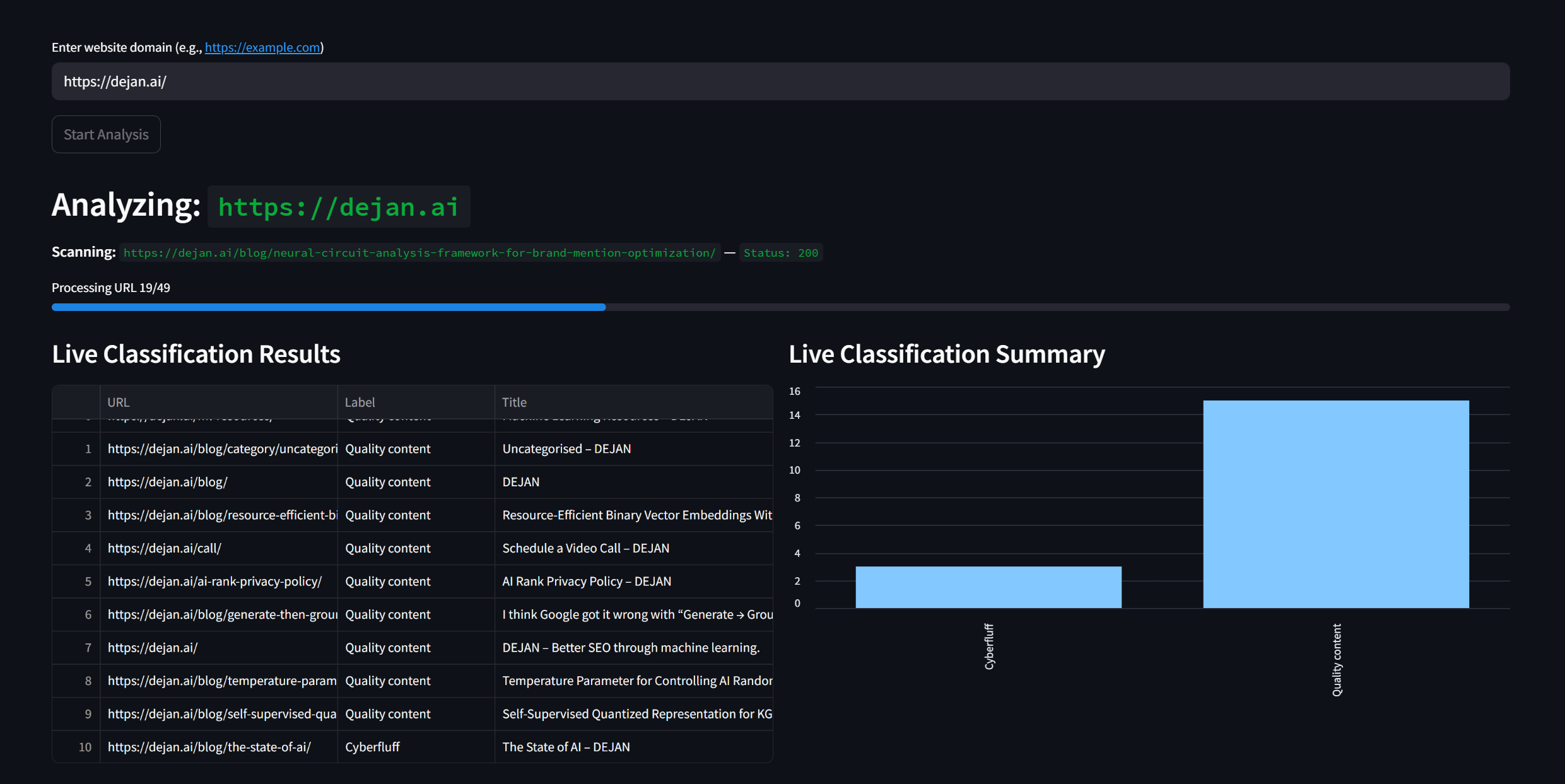
Demo: https://dejan.ai/tools/substance/ Preface In 1951, Isaac Asimov proposed an NLP method called Symbolic Logic Analysis (SLA) where text is reduced to its essential logical components. This method involves breaking down sentences into symbolic forms, allowing for a precise examination of salience and semantics analogous to contemporary transformer-based NER (named entity recognition) and summarisation techniques. In…