
Cloudflare Search for Agents turns any site into an AI-searchable API with one toggle
 Dan Petrovic ·
· AI SEO DEJAN 0292
Cloudflare Search for Agents adds a discoverable /.well-known/search API to any Cloudflare domain with one toggle, returning ranked Markdown chunks via hybrid search.

On November 25, 2026, Cloudflare launched Search for Agents in beta on all plans, including Free. Flipping one toggle under Quick Actions in the Cloudflare dashboard creates an AI Search instance, crawls the domain through sitemaps and internal links up to 5 hops deep (capped at 100,000 pages per crawl, or 500 pages per day on Workers Free), injects four discovery <meta> tags into every HTML page, and exposes a search endpoint at /.well-known/search. Visiting AI agents query that endpoint with keywords or natural language and receive up to 10 ranked 1,024-token Markdown chunks instead of crawling full HTML pages one by one.
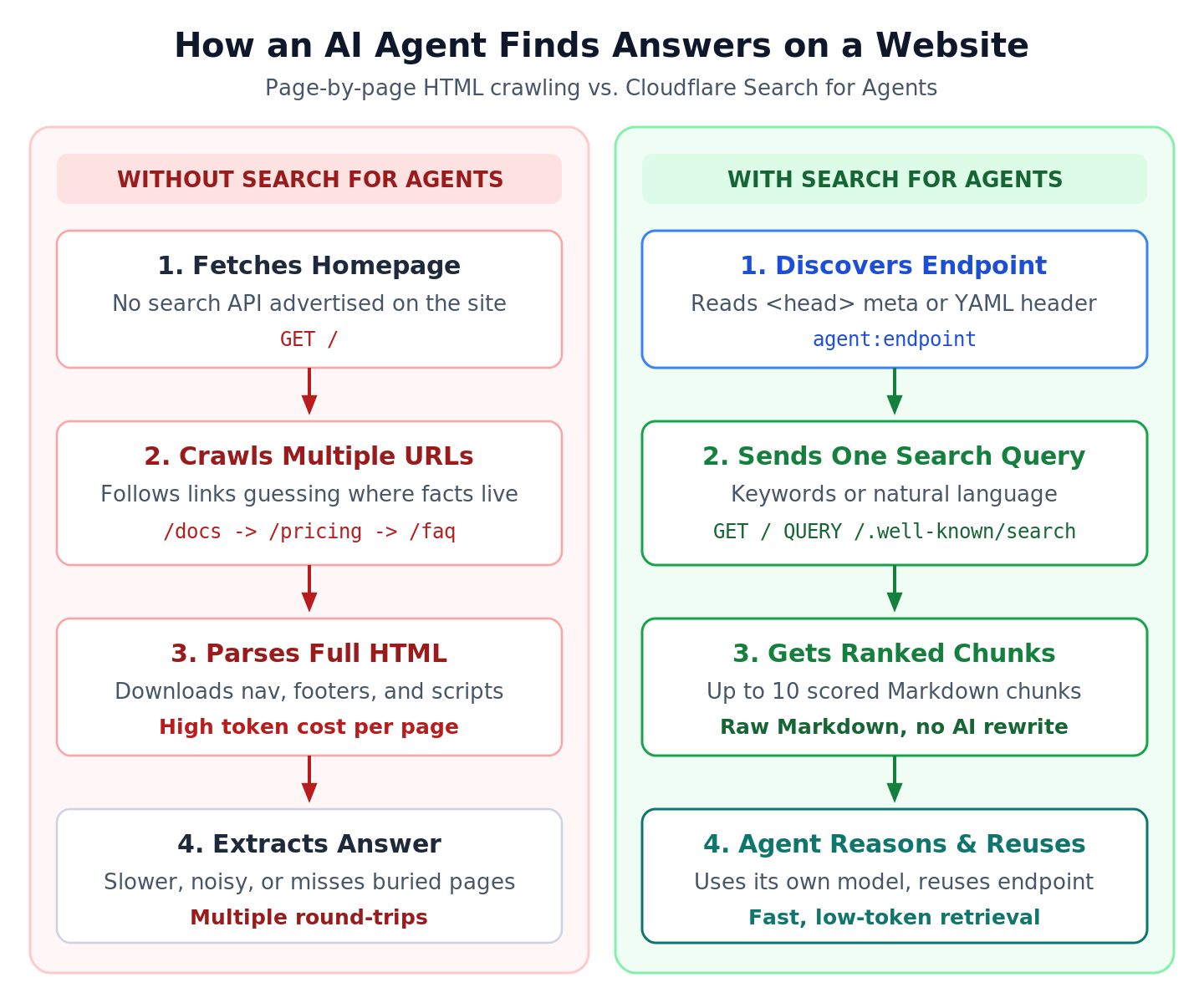 Figure 1: Traditional multi-page HTML crawling versus direct retrieval through
/.well-known/search.
How agents discover and query a site
When Search for Agents is active, Cloudflare injects four tags into the <head> of every HTML response on the domain:
<meta name="agent:instructions" content="Use this search API to find relevant content across this site with keywords or natural-language queries, instead of crawling individual pages. Results are returned in Markdown.">
<meta name="agent:endpoint" content="https://example.com/.well-known/search?q={query}">
<meta name="agent:method" content="GET">
<meta name="agent:documentation" content="https://developers.cloudflare.com/ai-search/how-to/search-for-agents/">
If Markdown for Agents is also active and an agent requests a page with Accept: text/markdown, Cloudflare places the same four fields in YAML front matter at the top of the Markdown document.
An agent that reads those tags can query the domain directly using a standard GET request or the IETF Proposed Standard HTTP QUERY method (RFC 10008, published June 2026), which carries plain-text or JSON search payloads in the request body without changing server state:
curl --get "https://example.com/.well-known/search" --data-urlencode "q=How do I verify webhook signatures?"The endpoint returns raw retrieved content in Markdown with source paths and relevance scores. It omits AI answer generation because the calling agent already runs its own language model and context window.
What the toggle configures under the hood
For SEO teams, Search for Agents behaves like a managed internal search index built on top of your existing crawl surface. Cloudflare creates an AI Search instance named search-for-agents-<ZONE_ID> using the discover parse type, which reads XML sitemaps and follows internal links while respecting robots.txt. Access to the live /.well-known/search endpoint remains governed by your existing WAF, Bot Management, and AI Crawl Control rules.
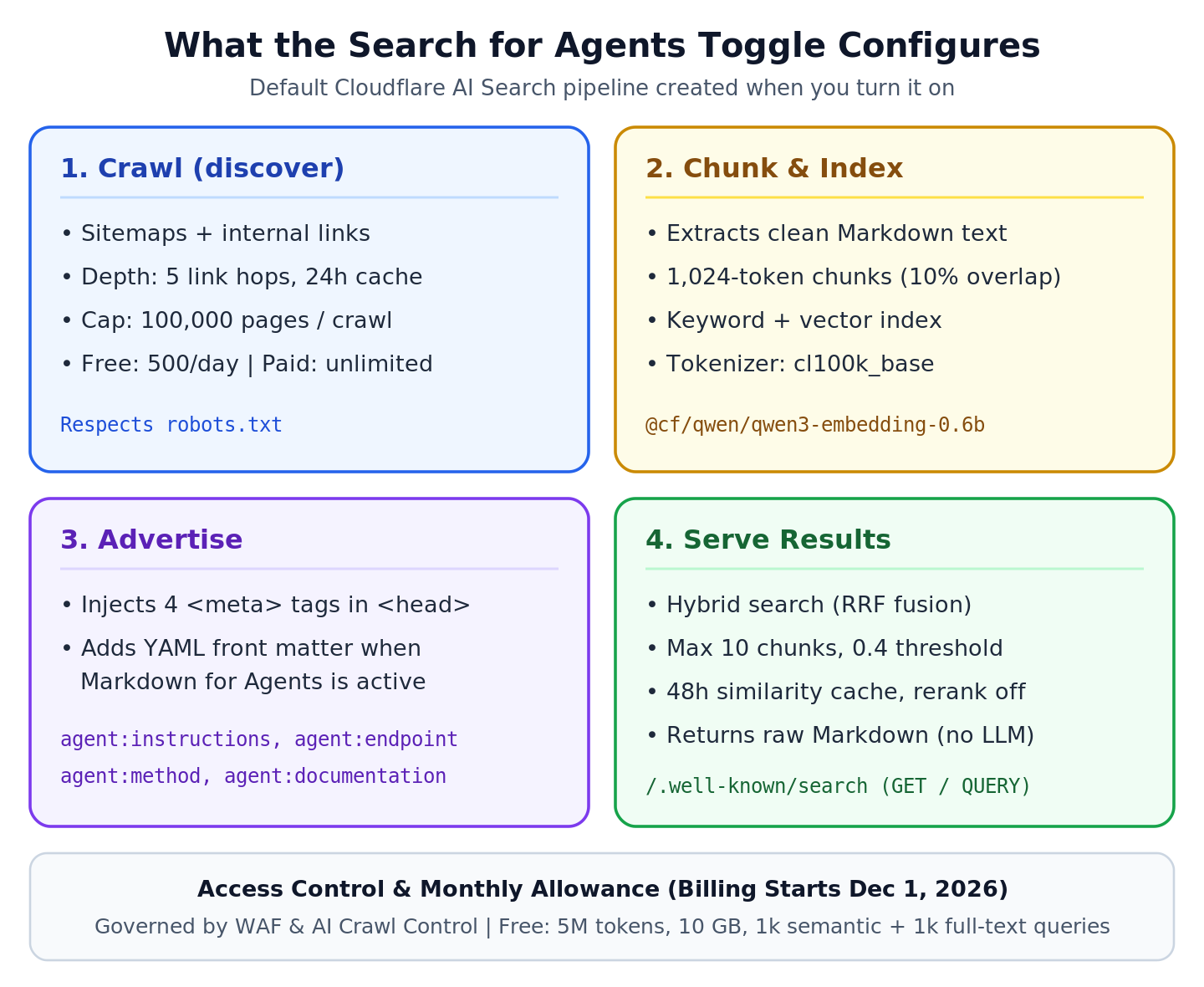 Figure 2: Default crawl, indexing, metadata injection, and hybrid retrieval settings created by the Search for Agents toggle.
| Layer | Setting | Default value |
|---|---|---|
| Crawl | Parse type | discover (sitemaps + internal links) |
| Crawl | Depth & page cap | 5 link hops; up to 100,000 pages per crawl |
| Crawl | Crawl cache age | 24 hours |
| Indexing | Chunking | 1,024 tokens per chunk, 10% overlap (cl100k_base) |
| Indexing | Embedding model | @cf/qwen/qwen3-embedding-0.6b (fixed at creation) |
| Retrieval | Search mode | Hybrid (keyword + vector search via Reciprocal Rank Fusion) |
| Retrieval | Result cap & threshold | 10 chunks max; match threshold 0.4 |
| Retrieval | Reranking & query rewrite | Off by default (configurable in AI Search settings) |
| Caching | Similarity cache | On, 48-hour duration |
Where it sits beside sitemaps, llms.txt, and Markdown for Agents
Each discovery mechanism solves a different retrieval step. An XML sitemap lists URLs for crawlers to fetch, /llms.txt provides a curated Markdown directory of priority pages, and Markdown for Agents converts a single requested HTML page into Markdown at the edge. Search for Agents indexes the domain as a whole and lets an agent run a single site-wide search query to pull back the matching chunks.
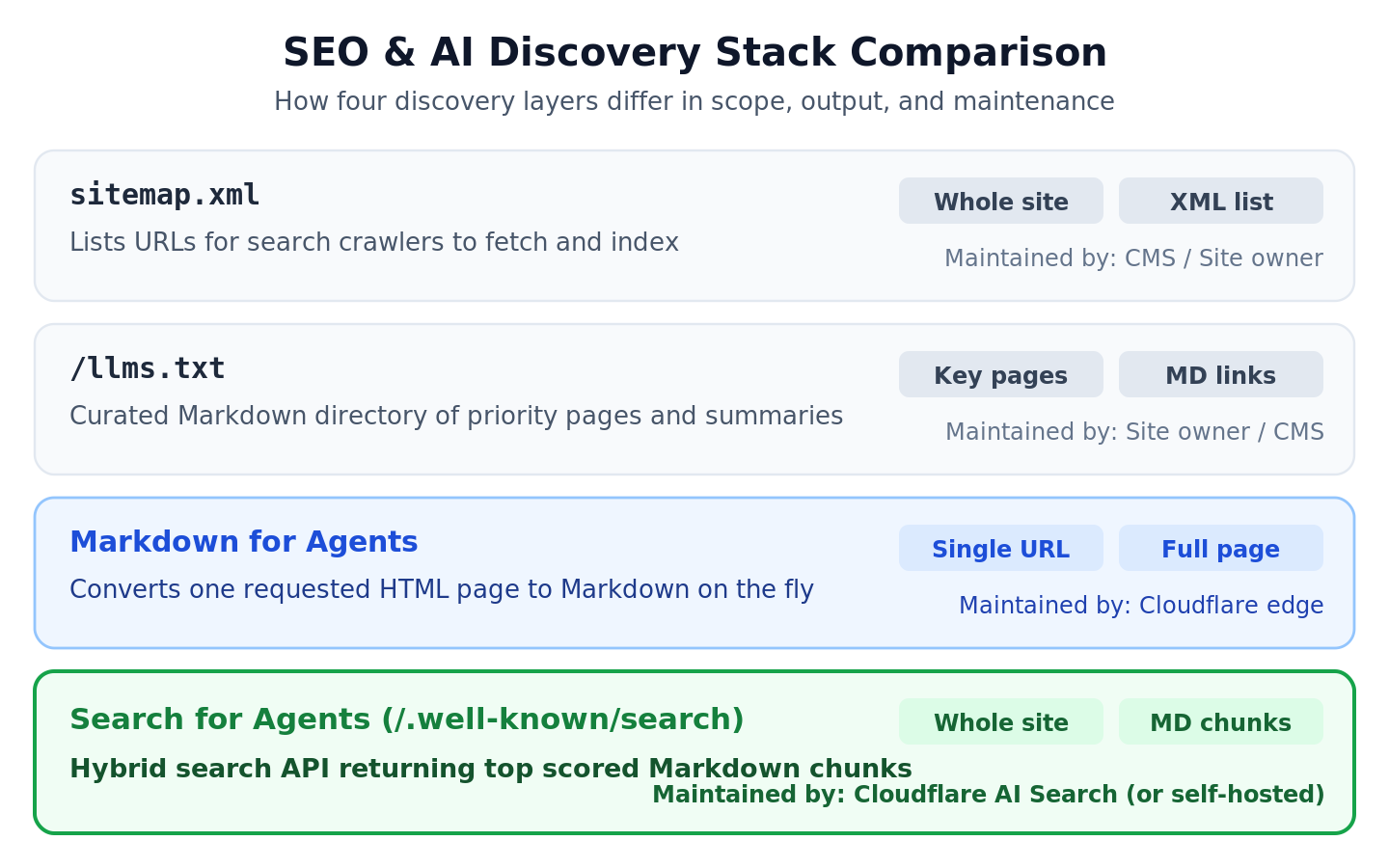 Figure 3: Comparison of four discovery and retrieval layers used by search crawlers and AI agents.
Limits and pricing
Search for Agents uses standard Cloudflare AI Search limits and pricing, with billing starting December 1, 2026. Every account includes a monthly free allowance of 5 million ingestion tokens, 10 GB-month of storage, 1,000 semantic queries, and 1,000 full-text queries.
| Resource | Workers Free | Workers Paid |
|---|---|---|
| Max pages crawled per day | 500 pages | Unlimited (up to 100,000 per crawl) |
| Files per instance | 100,000 | 500,000 (hybrid search) |
| Base ingestion (over 5M tokens) | $0.75 / 1M tokens | $0.75 / 1M tokens |
| Storage (over 10 GB-month) | $2.00 / GB-month | $2.00 / GB-month |
| Hybrid / semantic queries (over 1,000) | $0.75 / 1,000 queries | $0.75 / 1,000 queries |
| Full-text queries (over 1,000) | $0.10 / 1,000 queries | $0.10 / 1,000 queries |
Because website crawling is bounded by whichever limit is lowest, the 500-page daily crawl cap is the binding ceiling on Workers Free. Ingestion tokens are counted on final indexed chunks after splitting, so the 10% chunk overlap is counted in each neighbouring chunk. Because the underlying resource is a standard AI Search instance, the same index can also serve public REST, MCP, Workers, or embedded on-site search widgets.
Appendix: convention status, discovery flow, and self-hosting
/.well-known/search is a Cloudflare convention rather than a registered web standard. The /.well-known/ prefix is defined by IETF RFC 8615, while search does not appear in the IANA Well-Known URIs registry.
The mechanism is designed for any LLM-backed agent on the open web and works as a two-step exchange on the first visit:
- Capability advertisement: The agent fetches any page on the domain and reads the
agent:instructions,agent:endpoint(?q={query}URL template), andagent:method(GET) tags from the HTML<head>or Markdown YAML front matter. - Query execution: The agent substitutes its search text into
{query}, sends the request to/.well-known/search, receives query-time scored Markdown chunks, and can reuse that endpoint for follow-up queries in the same session without fetching additional HTML pages.
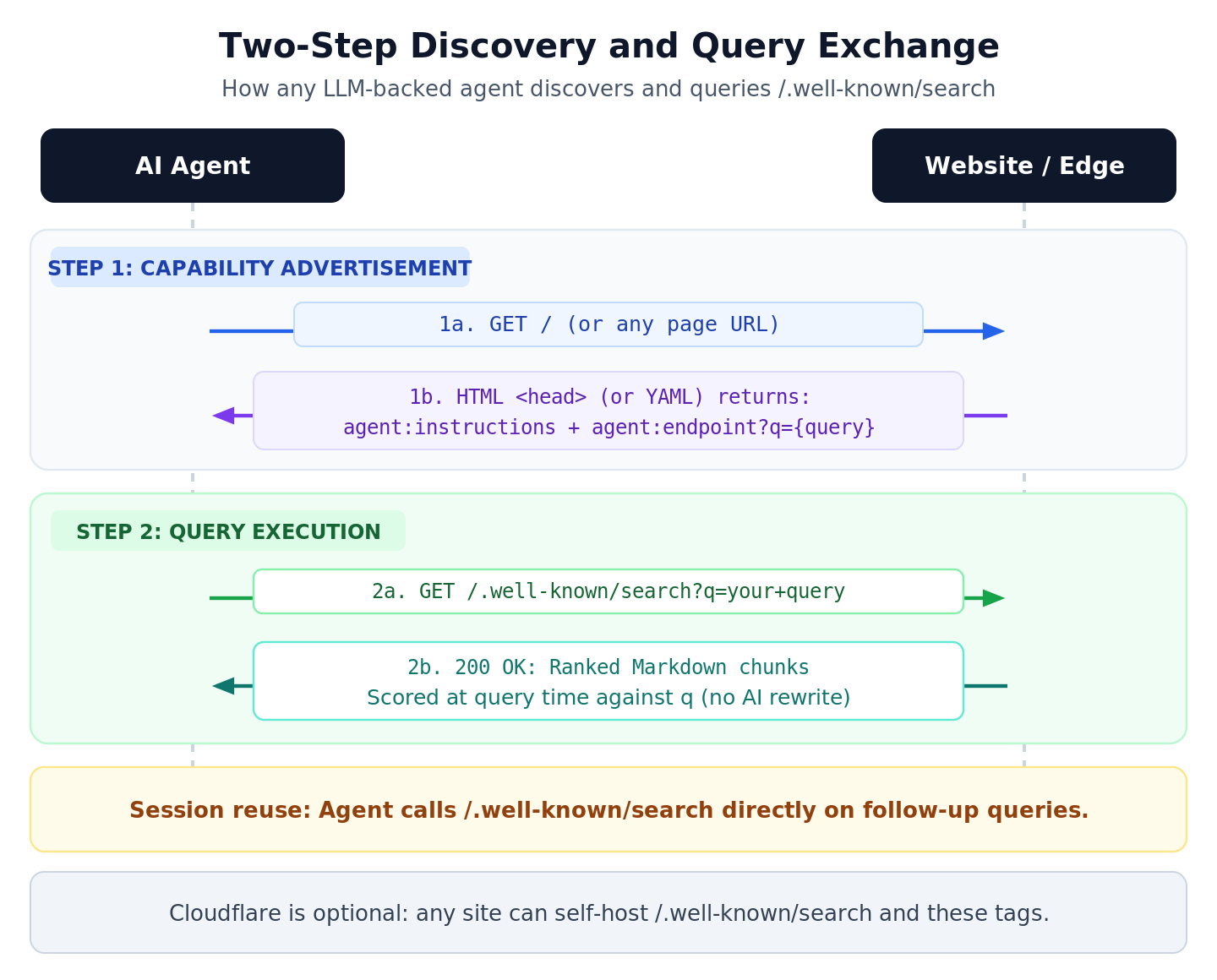
Cloudflare is not required to support this pattern. Any site running its own query-time search index (keyword, vector, hybrid, or reranked) can serve ranked Markdown chunks at /.well-known/search and add the same four agent:* <meta> tags to its HTML <head>.
Related concepts
- AI Agent
- AI Crawlers
- AI Search
- llms.txt
- Model Context Protocol
- Retrieval-Augmented Generation
- Site Search in AI Mode
- Technical SEO
- Vector Search
Comments
Sign in with Google to comment and annotate this content.